Custom Extension Springs — Made to Your Drawing, Built for Production
We manufacture custom extension springs with precise initial tension, controlled load characteristics, and batch-to-batch consistency. From sampling to mass production, every spring is engineered for your specific application requirements.
Fast prototyping, in-house quality control, and export-ready packaging — all from one factory, delivered door-to-door.
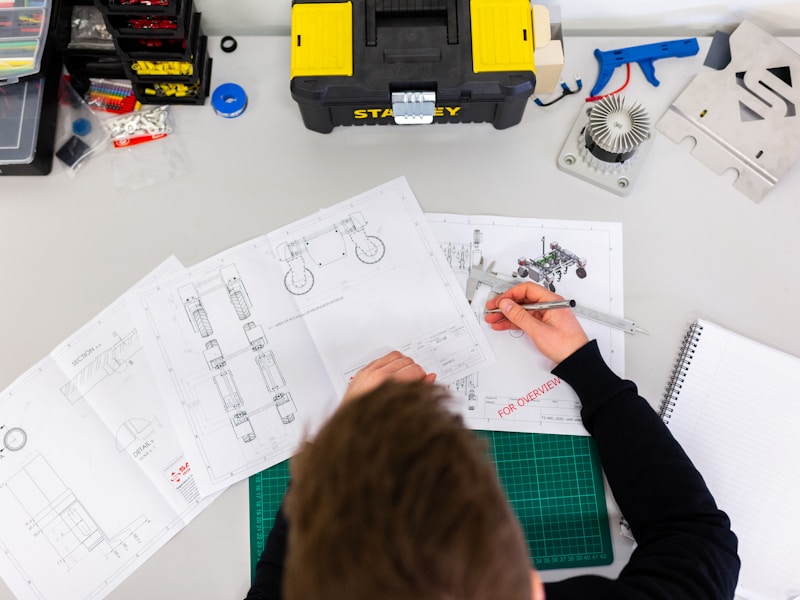
How Buyers Typically Come to Us for Extension Springs
Whether you have complete drawings, physical samples, or just an application challenge — we have a process to help you get the right spring.
Drawing-Based Inquiry
You have drawings or specifications
You already have technical drawings, CAD files, or defined parameters. You need a manufacturer who can confirm manufacturability, validate performance expectations, and ensure batch stability.
- Verify load and deflection calculations
- Confirm material and surface treatment suitability
- Get accurate lead time and pricing
- Ensure long-term supply consistency
Sample-Based Reverse Engineering
You have a physical sample
Your original supplier stopped production, or quality has become inconsistent. You have a physical sample but no documentation. We measure, analyze, and recreate the spring to match or improve on the original.
- Precision measurement of all dimensions
- Material identification and testing
- Load curve verification
- Documentation for future orders
Application-Based Consultation
You have an application challenge
You know what the spring needs to do, but not the exact specifications. Share your application requirements — mounting space, load range, environment, cycle life — and our engineers will help define the parameters.
- Application environment analysis
- Load and deflection requirement definition
- Material and hook type recommendation
- Prototype for real-world testing


What Is an Extension Spring — And Why Specifications Matter
Extension springs, also called tension springs, store energy by being stretched rather than compressed. Unlike compression springs, they are wound with initial tension — a preload force that holds the coils together before any external load is applied. This initial tension is what defines how the spring behaves at rest and determines the force required to begin extension.
The performance of an extension spring depends entirely on getting the specifications right: wire diameter affects fatigue life and load capacity; free length and number of coils determine the working range; hook type affects durability and mounting options. Small errors in load calculation or material selection often lead to early failure — not just spring failure, but system-level problems that can be misdiagnosed as design flaws.
Common procurement mistakes: Specifying only outer diameter and free length without defining initial tension or working load points. Ignoring the hook-to-body transition (a common stress concentration point). Choosing materials without considering the operating environment. These oversights lead to springs that "look correct" but fail in service.
The difference between a spring that lasts and one that fails prematurely often comes down to these specification details — details that require both engineering knowledge and manufacturing experience to get right.
Where Extension Springs Are Commonly Used
Extension springs serve critical functions across industries — from recreational equipment to agricultural machinery. Each application has unique requirements for load, environment, and cycle life.
Trampoline Springs
High cycle fatigue, safety-critical. Requires consistent tension across all springs in the set.
Drawbar Springs / Towing Systems
Shock absorption under heavy loads. Corrosion resistance for outdoor exposure.
Garage Door Mechanisms
High cycle counts (10,000+ cycles). Safety and lifespan are critical.
Industrial Equipment Return Mechanisms
Precise return force. Stable performance over extended operation.
Agricultural Machinery Linkages
Mud, water, debris exposure. Corrosion resistance essential.
Material Handling / Conveyors
Continuous operation. Consistent tensioning over millions of cycles.
Power Tools / Hand Tools Recoil
Space-constrained. High force in compact form factor.
Automotive Under-Hood Mechanisms
Temperature extremes. Oil/chemical resistance required.
Fitness Equipment Tension Systems
High fatigue frequency. Batch consistency for uniform feel.
HVAC Dampers / Latches
Quiet operation. Long-term durability in climate systems.



Material Options for Extension Springs
Material selection should be driven by your operating environment, not just load requirements. Indoor climate-controlled applications have different needs than outdoor machinery exposed to moisture, chemicals, or temperature extremes.
Music Wire (ASTM A228)
Best for: Indoor, dry environmentsHighest tensile strength of common spring materials. Excellent fatigue life for high-cycle applications. Most cost-effective for general-purpose springs.
Oil Tempered Wire
Best for: Higher stress applicationsBetter performance under higher stress than music wire. Good for automotive and industrial applications where springs see sustained loading.
Stainless Steel 302/304
Best for: Mild corrosion, food/medicalGood corrosion resistance for mildly corrosive environments. Common in food processing, medical devices where rust contamination is unacceptable.
Stainless Steel 316
Best for: Marine, chemical exposureSuperior corrosion resistance, especially against chlorides. Essential for marine applications, chemical processing, and coastal installations.
Galvanized Wire
Best for: Outdoor, moisture exposureCost-effective corrosion protection for outdoor applications. Zinc coating provides sacrificial protection. Good for agricultural and construction.
Phosphor Bronze
Best for: Electrical, non-magneticExcellent electrical conductivity and corrosion resistance. Non-magnetic. Used in electrical contacts and switches.
Different Hooks for Extension Springs — Choose by Mounting & Load Direction
The hook is often the weakest point of an extension spring. Selecting the right hook type for your mounting method and load direction is critical for reliability and safety.


Why Hook Selection Matters
The hook-to-body transition is the most common failure point in extension springs. Stress concentration at this transition causes most extension spring failures — not coil breakage. When selecting a hook type, consider: installation space and access, load direction (axial vs. angular), rotation requirements, wear at contact points, and whether the application requires a safety closure to prevent disengagement.
How We Control Quality — Not Just Claim It
Quality control isn't a checkbox — it's a process embedded at every stage from incoming material to final packaging.

Precision Load Testing
Verifying tension and load characteristics at specified deflection points

Incoming Material Verification
Wire diameter, tensile strength, and material certification review
Incoming Wire Inspection
Material certificates verified, wire diameter and tensile strength sampled
In-Process Checks
Dimensions, hook formation, free length checked during production
Load Testing
Initial tension and load at specified deflection verified on testing equipment
Fatigue Testing
Cycle life validation available for critical applications requiring documented endurance
Batch Records
Traceability from wire lot to finished product for every production batch
Real Products, Real Factory

Hook End Inspection
Quality check on hook formation and transition

Sample Board
Organized samples for customer approval

Pre-Assembly State
Springs grouped and oriented for line delivery

Shipping Packaging
Export-ready cartons with custom labeling
CNC Spring Coiling
Precision automated coiling process
Wire Material Storage
Organized raw material inventory

Production Line
High-volume manufacturing capability

Heat Treatment
Stress relieving for optimal performance

Dimensional Inspection
Precision measurement verification

Surface Treatment
Zinc plating and coating processes

Final Assembly
Pre-assembly and kitting services

Quality Lab
Testing and certification facilities
Hook End Inspection
Quality check on hook formation and transition
Sample Board
Organized samples for customer approval
Pre-Assembly State
Springs grouped and oriented for line delivery
Shipping Packaging
Export-ready cartons with custom labeling
CNC Spring Coiling
Precision automated coiling process
Wire Material Storage
Organized raw material inventory
Production Line
High-volume manufacturing capability
Heat Treatment
Stress relieving for optimal performance
Dimensional Inspection
Precision measurement verification
Surface Treatment
Zinc plating and coating processes
Final Assembly
Pre-assembly and kitting services
Quality Lab
Testing and certification facilities
Common Problems Buyers Face After Using Extension Springs
Correct dimensions visually, but tension doesn't match — assembly fails after installation
Quick check: Measure initial tension, not just free length and OD
→ Rework & project delaysSame specs, different suppliers — noticeable performance variations
Quick check: Compare load at specific deflection points across batches
→ Quality inconsistencyWorks fine initially, premature breakage after a few months
Quick check: Examine fracture location (hook area vs coil body)
→ Warranty claims & recallsTension or lifespan inconsistent between batches
Quick check: Sample test initial tension from each batch
→ Production disruptionSample stage OK, mass production reveals problems
Quick check: Verify sample matches mass production tooling
→ Large-scale lossesEnvironmental factors ignored — rust or performance degradation
Quick check: Review operating environment vs material choice
→ Field failuresReplacement procurement can't accurately match original parameters
Quick check: Measure wire diameter, OD, free length, initial tension, hook type
→ Extended downtimeSpring failure misdiagnosed as structural or design problem
Quick check: Test spring load curve against design requirements
→ Wasted engineering resourcesWrong installation or force direction damages hook area
Quick check: Verify hook orientation matches load direction
→ Premature failureOverseas communication unclear — repeated rework and delays
Quick check: Use complete spec sheets with all parameters defined
→ Cost overrunsWhen an Extension Spring Fails, the Impact Is Bigger Than It Looks
Mechanism Failure
One failed spring → entire mechanism cannot return to position. Full system shutdown until replacement arrives.
Common causes:
Fatigue from over-extension, stress concentration at hook transition, material defects
Prevention: Proper stress analysis + fatigue testing before production
Design Misdiagnosis
Load deviation → product performance is misjudged as design failure. Engineering time wasted chasing the wrong problem.
Common causes:
Incorrect initial tension, wrong spring rate, material substitution without notification
Prevention: Load verification at defined points + batch documentation
Brand Damage
Corrosion or fatigue → customer complaints, returns, and lasting reputation damage that extends far beyond the spring itself.
Common causes:
Wrong material for environment, inadequate surface treatment, surface scratches from handling
Prevention: Environment-matched material selection + proper packaging
How We Solve These Problems
Define Initial Tension & Working Load Points
We don't just match dimensions — we verify load characteristics at specific deflection points. Every spring is tested to ensure initial tension and spring rate match your requirements, not just free length and diameter.
Discuss This With an Engineer
Material Selection by Environment
Indoor climate control? Outdoor with moisture exposure? Chemical environment? We recommend materials based on where the spring will actually operate — not just what's cheapest or most common.
Discuss This With an Engineer
Hook/End Design for Mounting & Safety
The hook is the most common failure point in extension springs. We help you select the right hook type based on your mounting method, load direction, space constraints, and safety requirements.
Discuss This With an Engineer
Surface Treatment for Corrosion & Wear
Zinc plating, black oxide, passivation, powder coating — each serves different purposes. We match surface treatment to your corrosion resistance needs, appearance requirements, and budget.
Discuss This With an Engineer
Consistency Control for Mass Production
Sample approval is just the beginning. We maintain batch-to-batch consistency through controlled tooling, in-process inspection, and statistical sampling — so batch #50 performs the same as batch #1.
Discuss This With an Engineer
Key Parameters That Actually Matter in Extension Spring Design

Extension spring with key dimensions labeled: Wire Diameter (d), Outer Diameter (OD), Free Length (L0), Hook Opening, and direction of pull
Wire Diameter (d)
Directly affects fatigue life and load capacity. Too thin risks early failure under cyclic loading; too thick wastes material and space.
Outer Diameter (OD)
Determines installation space requirements and affects spring rate. The ratio of OD to wire diameter impacts manufacturability.
Free Length (L0)
The spring length at rest with no load applied. Affects preload behavior and determines available working range.
Initial Tension (Fi)
The internal force holding coils together at rest. Critical for mechanisms requiring immediate load engagement.
Hook Type & Orientation
Affects durability, safety, and mounting options. Wrong hook selection is a common failure point.
Material & Surface
Determines environment suitability — temperature resistance, corrosion protection, and fatigue performance.
What to Provide in Your Drawing or Inquiry
Material Options for Extension Springs
Material selection should be driven by your operating environment, not just load requirements. Indoor climate-controlled applications have different needs than outdoor machinery exposed to moisture, chemicals, or temperature extremes.
Music Wire (ASTM A228)
Best for: Indoor, dry environments
Highest tensile strength of common spring materials. Excellent fatigue life for high-cycle applications. Most cost-effective for general-purpose springs.
⚠️ Not suitable for outdoor use without surface treatment — will rust quickly
Oil Tempered Wire
Best for: Higher stress applications
Better performance under higher stress than music wire. Good for automotive and industrial applications where springs see sustained loading.
⚠️ Still requires surface treatment for corrosion environments
Stainless Steel 302/304
Best for: Mild corrosion, food/medical
Good corrosion resistance for mildly corrosive environments. Common in food processing, medical devices where rust contamination is unacceptable.
⚠️ Lower strength than music wire — may need larger wire diameter
Stainless Steel 316
Best for: Marine, chemical exposure
Superior corrosion resistance, especially against chlorides. Essential for marine applications, chemical processing, and coastal installations.
⚠️ Higher cost than 302/304 — use only when environment requires it
Galvanized Wire
Best for: Outdoor, moisture exposure
Cost-effective corrosion protection for outdoor applications. Zinc coating provides sacrificial protection. Good for agricultural and construction.
⚠️ Coating may wear at contact points — consider for lower-cycle applications
Phosphor Bronze
Best for: Electrical, non-magnetic
Excellent electrical conductivity and corrosion resistance. Non-magnetic. Used in electrical contacts and switches.
⚠️ Lower strength — typically for lighter loads only


Surface Treatment Options
Surface treatment extends spring life in corrosive environments, improves appearance, and can reduce friction. The right choice depends on your operating conditions, not just aesthetics.

Zinc Plated
Most common corrosion protection. Silver-blue appearance. Provides sacrificial protection — zinc corrodes before the steel.
Salt spray resistance: 24-96 hours
Black Oxide
Black appearance with minimal dimensional change. Provides mild corrosion resistance when oiled. Often chosen for appearance.
Requires oil film for corrosion protection
Passivation (Stainless)
Chemical treatment for stainless steel that removes free iron and enhances the natural oxide layer.
Standard for food/medical grade stainless springs
Powder Coating
Thick, durable coating available in various colors. Excellent corrosion and abrasion resistance.
Best for larger springs where coating thickness is acceptable
Electrophoresis (E-Coating)
Uniform coating that reaches all surfaces including inside coils. Good corrosion protection with controlled thickness.
Even coverage in hard-to-reach areas
Phosphate Coating
Dark gray/black matte finish. Provides base for paint or oil absorption. Often used as pre-treatment.
Good base coat for further finishingDifferent Hooks for Extension Springs — Choose by Mounting & Load Direction
The hook is often the weakest point of an extension spring. Selecting the right hook type for your mounting method and load direction is critical for reliability and safety.

Machine Hook
Standard hook formed from last coil. Cost-effective for general applications with axial loading.

C-Hook / Side Hook
Hook opens to the side. Used when hook must engage from a perpendicular direction.

Extended Hook
Longer hook reach for engaging distant mounting points. More installation flexibility.

Swivel Hook
Allows rotation during operation. Reduces stress from misalignment or angular movement.
V-Hook
V-shaped opening for secure engagement on pins or rods. Good retention under vibration.
Center Hook
Hook aligned with spring centerline. Reduces bending stress for pure axial loading.
Double Loop / Full Loop
Closed loop on each end. Maximum strength but requires threading through mounting hardware.
Threaded Insert
Threaded end for screw-in mounting. Precise adjustment and secure attachment.
Why Hook Selection Matters
The hook-to-body transition is the most common failure point in extension springs. Stress concentration at this transition causes most extension spring failures — not coil breakage. When selecting a hook type, consider: installation space and access, load direction (axial vs. angular), rotation requirements, wear at contact points, and whether the application requires a safety closure to prevent disengagement.
From Drawing to Sample — Our Engineering Process
How We Control Quality — Not Just Claim It
Quality control isn't a checkbox — it's a process embedded at every stage from incoming material to final packaging.
Incoming Wire Inspection
Material certificates verified, wire diameter and tensile strength sampled
In-Process Checks
Dimensions, hook formation, free length checked during production
Load Testing
Initial tension and load at specified deflection verified on testing equipment
Fatigue Testing
Cycle life validation available for critical applications requiring documented endurance
Batch Records
Traceability from wire lot to finished product for every production batch
Sample Springs
Sampling is the critical step between design and production. We produce samples that match mass production tooling and processes — so sample approval means production will perform the same way.
Sample Confirmation Checklist
- Dimensional verification
- Load at specified points
- Initial tension verification
- Hook formation quality
- Surface finish inspection
- Functional fit test
Sample board with labeled specifications
Dimensional measurement verification


Pre-Assembly State
Beyond individual springs, we can provide pre-assembly services to reduce your handling time and ensure correct orientation during your production process.
- Springs grouped in sets (e.g., 4 springs per set for trampoline frames)
- Matched tension grouping for critical applications
- Pre-attached mounting hardware or connectors
- Oriented packaging for direct line-side delivery
- Custom labeling with part numbers and batch codes
Shipping & Packaging
Springs require careful packaging to prevent tangling, scratching, and corrosion during transit. We design packaging based on spring type, quantity, destination, and your receiving process requirements.

Inner Bags + Desiccant
Individual or grouped poly bags with moisture absorbers for rust prevention

Separation Paper
Interleaving paper or foam to prevent surface scratching and tangling

Carton Boxing
Sturdy cartons sized to prevent movement, with weight limits for handling

Pallet & Strapping
Export-standard pallets with strapping for container or air freight
Custom Labeling
Your part numbers, barcodes, batch codes per your receiving requirements
Real Products, Real Factory

Hook End Inspection
Quality check on hook formation and transition

Sample Board
Organized samples for customer approval

Pre-Assembly State
Springs grouped and oriented for line delivery

Shipping Packaging
Export-ready cartons with custom labeling
Why Overseas Buyers Work With Us
Engineering Review in 24-48h
Your drawings reviewed by engineers, not sales staff. Technical questions answered with technical understanding.
Example: Feedback on manufacturability within 2 business daysClear Spec Checklist
We provide standardized specification templates to reduce back-and-forth. Complete requirements captured upfront.
Example: Our checklist covers 15+ parameters often missedSampling Speed & Revision Control
Fast sample turnaround with documented revision tracking. Changes logged so production matches approved samples.
Example: Sample delivery typically 7-10 daysBatch Consistency Plan
Statistical sampling and batch records ensure production consistency. Not just first-batch quality, every-batch quality.
Example: Cpk documentation available on requestExport-Ready Packaging
Packaging designed for your receiving process. Custom labeling, palletization, and documentation for smooth customs.
Example: Barcode labels matching your inventory systemDoor-to-Door Shipping
Complete logistics support from factory to your facility. Sea freight, air freight, express — we handle the complexity.
Example: DDP delivery to most major marketsOne Point of Contact
Single contact for technical, production, and logistics. No bouncing between departments or starting over with each email.
Example: Same project manager from quote to deliveryTime Zone Friendly
Response within your business day. We understand overseas communication challenges and prioritize timely replies.
Example: Email replies within 12 hours for urgent mattersFrequently Asked Questions
Send your drawing.
Our engineers will review it within 24–48 hours.