Custom Wire Forms Manufacturer
From prototype to stable volume production — CNC forming, secondary operations, and comprehensive inspection ensure precision wire bending solutions for your critical applications.

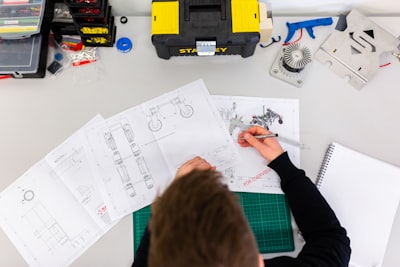


Who Benefits from Our Wire Forming Solutions
Engineers, procurement managers, and project leads trust our precision wire forming for mission-critical applications where consistency and technical expertise make the difference.

Procurement Teams
- Switching suppliers due to quality inconsistencies
- Need competitive pricing with reliable delivery
- Require consistent part-to-part repeatability

Design Engineers
- Working within tight space constraints
- Solving assembly interference issues
- Controlling critical angle and length tolerances

Project Managers
- Transitioning from prototype to production
- Scaling up volume with maintained quality
- Managing design changes efficiently
Ready to solve your wire forming challenges?
Explore Our CapabilitiesWhat Are Custom Wire Forms?
Wire forms are functional metal components created through precise bending, forming, and cutting processes. Unlike traditional springs designed primarily for energy storage, wire forms serve diverse mechanical functions including retention, positioning, guiding, connecting, and protection.
These components range from simple hooks and clips to complex 3D geometries with multiple bends, welded assemblies, and specialized end treatments.
Wire Forms vs. Springs: Understanding the Difference
While both use wire material and forming processes, wire forms prioritize geometric function over energy storage. They may incorporate elastic properties for retention or flexibility, but their primary purpose is mechanical positioning, securing, or structural support.
Have a unique application? Let's discuss your requirements.
Request Feasibility ReviewWire Form Product Gallery
Browse our diverse range of wire forming capabilities organized by function and structure.

Found something similar to your application?
Request Quote for Similar PartManufacturing Capability Ranges
Comprehensive specifications of our wire forming equipment and processes.
Need to verify if your design fits within our capabilities?
Share Your Design Constraints
Cut, Chamfer & Deburr
Precision end treatment ensures safety, assembly compatibility, and professional finish.
- Safe handling edges
- Assembly-ready ends
- Dimensional precision
Want to understand which forming method suits your application?
Discuss Your Project RequirementsSecondary Operations & Assembly
Value-added processes that transform basic wire forms into complete, assembly-ready components.
Welding & Joining
Spot welding, projection welding, and MIG/TIG processes create integrated multi-component assemblies with structural integrity.
Threading & Tapping
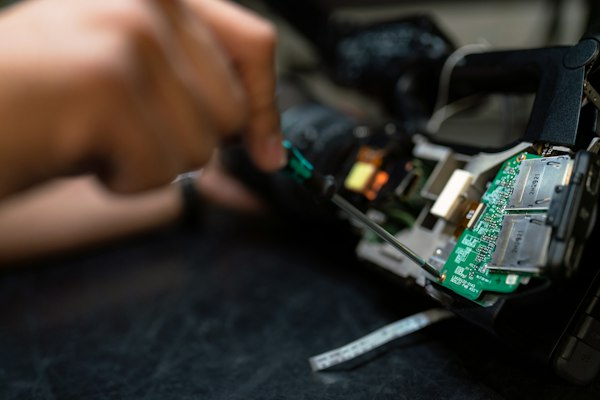
Machined threads, rolled threads, or formed ends enable direct fastening integration without additional components.

Swaging & Coining
Controlled deformation creates flattened ends, coined features, or diameter reductions for specific functional requirements.
Need a complete assembly solution beyond basic wire forming?
Send Your Assembly RequirementsSurface Finishes & Corrosion Protection
Protective coatings that extend component life and ensure dimensional consistency.
Visual Comparison: Same Part, Six Different Finishes






Electroplating
Zinc, nickel, and chrome plating provide thin, uniform metallic coatings with excellent corrosion resistance and wear protection.
Chemical Conversion
Black oxide and phosphate coatings chemically convert the surface layer into a protective barrier with minimal dimensional change.
Powder & E-Coating
Thick protective films deliver maximum environmental protection with customizable colors and textures.
Need guidance on selecting the right finish for your environment?
Get Finish RecommendationTolerances & Inspection Strategy
Engineering-based tolerance strategies that account for material springback and process capabilities.
Understanding Wire Form Tolerances
Wire forming differs fundamentally from machining. Material springback, wire diameter variation, and cumulative bend effects require realistic tolerance strategies.
Effective designs identify Critical-to-Quality (CTQ) dimensions and apply appropriate control methods.
Length & Position
Overall lengths and feature-to-feature distances accumulate variation through multiple bends.
Controlled: ±(0.25 × Wire Ø)
Bend Angles
Material springback causes angular variation that compounds through sequential bends.
Controlled: ±1.5°
Bend Radius & Loops
Inside bend radius varies with material flow and springback characteristics.
Loop Diameter: ±(1.0 × Wire Ø)

Go/No-Go Gauges

Optical Comparator
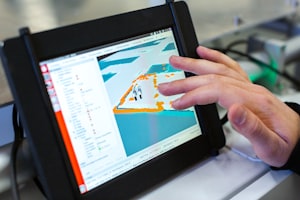
CMM Measurement

Angle Fixtures
Need help defining realistic tolerances for your wire form design?
Upload Drawing for Tolerance ReviewDesign for Manufacturing Guide
Download our comprehensive DFM checklist developed through thousands of wire form projects.
📄 Download Wire Form DFM Checklist (PDF)Key DFM Principles Covered
Bend Radius Guidelines
- Minimum radius recommendations by material type and wire diameter
- How tight radii affect material stress and crack formation
- Radius multiplier charts for common materials
Cumulative Tolerance Management
- How sequential bends compound dimensional variation
- Strategies for tolerance stack-up mitigation
- Identifying true Critical-to-Quality dimensions
End Treatment Best Practices
- Cut end deburring requirements for safe handling
- Chamfer and radius specifications for assembly clearance
- Ground vs. cut ends for precision applications
Ready to optimize your wire form designs?
Download Complete DFM ChecklistPrototyping & Sampling Process
Streamlined prototype development validates your design quickly and reduces risk.
From Drawing to Production: Our 6-Step Process
Need samples quickly to validate your design?
Request Prototype Quote with TimelineApplications by Function
Wire forms solve mechanical challenges across industries—organized by what they do.
Retention
Clips, spring retainers, snap rings
Clamping
Hose clamps, cable ties, wire grips
Positioning
Locating pins, alignment guides
Connecting
Links, hooks, eyelets, attachments
Industries We Serve

Automotive
Seat mechanisms, door latches, trunk springs, cable routing, sensor brackets

Appliances
Dishwasher racks, oven door springs, refrigerator shelving

Electronics
Battery contacts, PCB mounting clips, cable management

Industrial Equipment
Safety guards, conveyor components, filtration systems
Don't see your specific industry? We work with unique applications daily.
Discuss Your ApplicationQuality Control & Traceability
Systematic quality processes ensure every wire form meets specifications.
Incoming Material
- Material certifications verified
- Lot numbers recorded for traceability
- Dimensional verification of wire diameter
In-Process Control
- First article inspection before production
- Hourly dimensional checks
- Statistical process control (SPC)
Final Inspection
- Comprehensive dimensional reports
- Visual inspection against standards
- Surface finish verification
Shipping Preparation
- Protective packaging
- Lot identification labels
- Certificate of conformance included

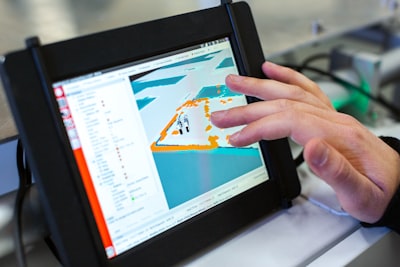
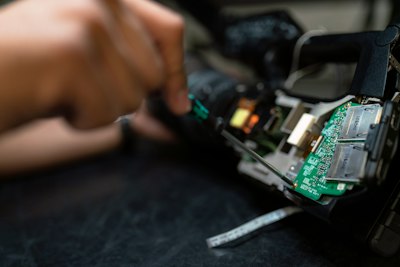
Need specific quality documentation or certifications?
Request Quality Documentation DetailsPackaging & Shipping Solutions
Protective packaging strategies ensure your wire forms arrive damage-free.

Scratch & Deformation Protection
Layered packaging systems prevent part-to-part contact while maintaining compact shipping volumes.
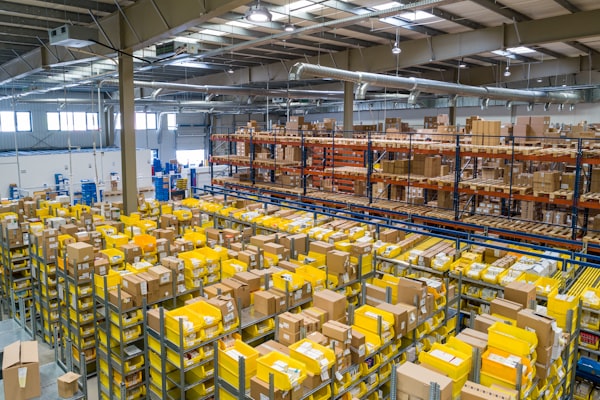
Corrosion Prevention
Material-specific anti-corrosion methods protect parts from moisture exposure during storage and transit.

Assembly Line Integration
Smart packaging formats reduce your receiving and handling time with organized, labeled quantities.
Have specific packaging or export requirements?
Request Custom Packaging OptionsProcurement Risk Prevention Guide
Common wire form challenges buyers face—and the engineering strategies that prevent problems.
Assembly Interference
Risk: Parts look identical but cause jamming during assembly
Prevention: Define CTQ dimensions. Verify springback on first articles. Use go/no-go gauges.
Angle Drift from Springback
Risk: Bend angles shift between batches affecting fit
Prevention: Establish springback compensation in tooling. Specify realistic angular tolerances.
Coating Thickness Growth
Risk: Plated parts become oversized and won't fit
Prevention: Calculate coating buildup. Specify pre-plate or post-plate dimensions.
Batch-to-Batch Inconsistency
Risk: Parts from different production runs don't match
Prevention: Seal approved first article as master standard. Require dimensional reports.
Concerned about any of these risks in your current supply chain?
Request Quality Assurance Plan ReviewFrequently Asked Questions
Engineering and procurement answers based on thousands of wire form projects
What information do you need to quote wire forms?
+For accurate quoting, we need: Drawing or sketch with dimensions, Material specification, Surface finish requirements, Critical-to-quality dimensions, and Annual volume estimate.
Can you manufacture complex 3D wire forms?
+Yes, our CNC wire forming equipment handles complex 3D geometries with multiple bends in different planes. We routinely produce parts with 10-20+ bends including compound angles, loops, and offset features.
What tolerances are realistic for wire forming?
+Standard capabilities: Linear dimensions ±(0.5 × wire diameter), Bend angles ±3°, Radii ±(0.3 × wire diameter). Tighter control possible on critical features.
Do you offer welding and assembly services?
+Yes, we provide spot welding, projection welding, MIG/TIG welding, and mechanical assembly including riveting, threading, and swaging.
What is the typical prototype lead time?
+Simple 2D forms: 3-5 days. Complex 3D geometries: 7-10 days. Parts requiring welding/assembly: 10-15 days. Rush service available.
Still have questions? We're here to help.
Contact Our Engineering TeamRequest Engineering Quote
Submit your wire form requirements and receive expert feedback within 24-48 hours
Our Commitment to You
Engineering Review
Every quote reviewed by experienced engineers
Complete Confidentiality
Your designs remain strictly confidential
Fast Feasibility Feedback
Preliminary pricing within 1-2 business days